
Table of Contents
Mold and mildew are common bathroom problems because bathrooms naturally have warm, damp, and humid conditions. If moisture remains on surfaces for too long, mold can develop around grout, caulk, shower walls, ceilings, and fixtures.
The good news is that small areas of mold can often be addressed with proper cleaning and moisture control. In this guide, we’ll explain how to clean bathroom mold, remove mildew, identify common causes, and prevent mold from coming back.
What Causes Bathroom Mold and Mildew?
Bathroom mold develops when moisture and humidity remain present for extended periods. Poor ventilation, plumbing leaks, wet towels, and damp surfaces can all contribute to mold growth.
Common areas where you may find bathroom mold and mildew include:
- Shower walls and doors
- Bathroom grout
- Silicone caulk
- Around sinks and fixtures
- Bathroom ceilings and walls
- Shower curtains
- Bath mats
- Areas affected by plumbing leaks
If mold keeps returning to the same location, cleaning the visible growth may not be enough. You should also identify and address the underlying moisture problem.
How to Clean Bathroom Mold Step by Step
Knowing how to clean bathroom mold properly can help you address small areas of surface growth while keeping the surrounding area dry.
1. Improve Ventilation Before Cleaning
Before starting the cleaning process, make sure the bathroom has adequate ventilation. Turn on the exhaust fan and open a window if possible.
Good airflow helps reduce moisture and allows surfaces to dry more quickly.
Pro Tip: Keep the exhaust fan running during your cleaning process and follow the ventilation instructions provided on any cleaning product you use.
2. Protect Yourself Before Cleaning
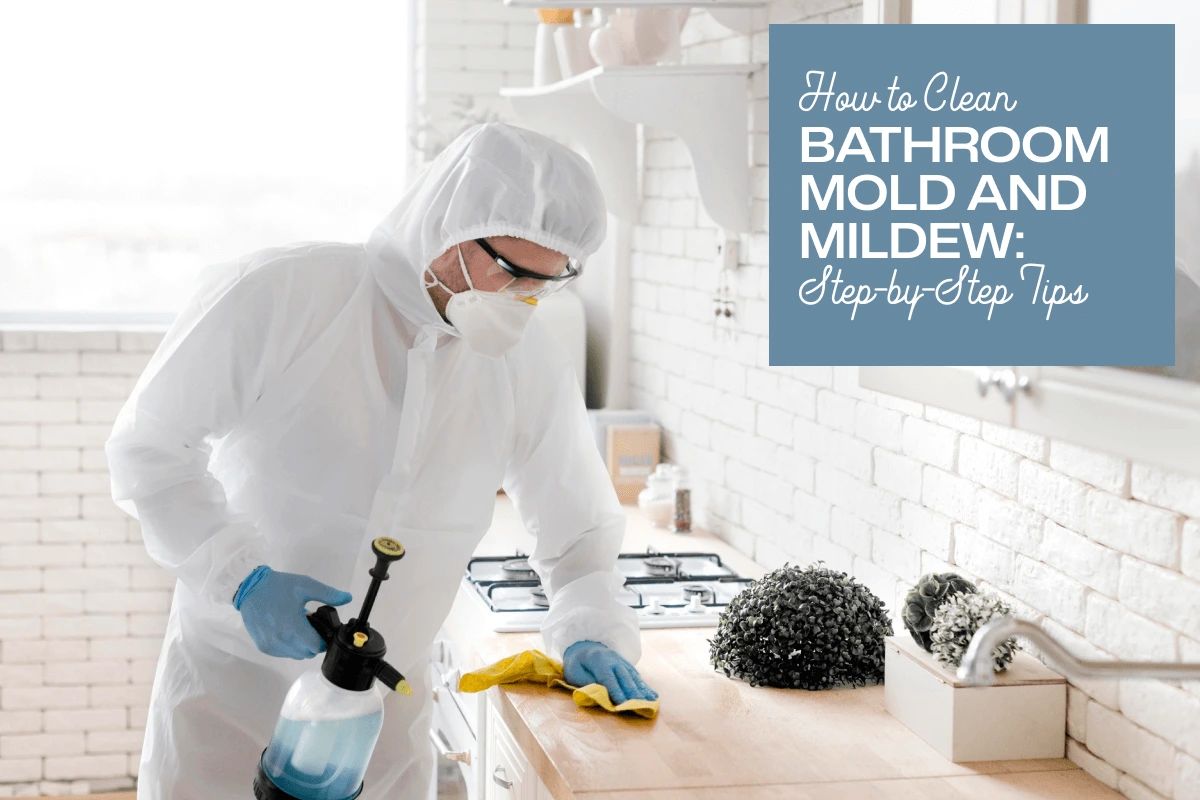
Before beginning bathroom mold removal, use appropriate basic protection, such as cleaning gloves and eye protection.
If mold covers a large area, repeatedly returns, or is associated with significant water damage, professional assistance may be appropriate.
3. Apply an Appropriate Mold Cleaner
Choose a bathroom mold cleaner that is suitable for the affected surface. Carefully read and follow the product’s instructions before applying it.
Apply the cleaner to the affected area and allow it to remain for the recommended amount of time.
Important: Never mix different cleaning products. In particular, bleach should never be mixed with vinegar, ammonia, or other household cleaners because dangerous fumes can result.
4. Scrub the Affected Area
After allowing the cleaner to work according to its instructions, gently scrub the affected surface using an appropriate brush or cleaning tool.
Pay special attention to grout lines, corners, joints, and other areas where moisture can collect.
If mold remains deeply embedded in old caulk after cleaning, replacing the affected caulk may be a better solution than repeatedly cleaning it.
5. Rinse and Dry the Surface
After cleaning, rinse or wipe the area according to the cleaning product’s instructions.
Remove excess moisture with a clean microfiber cloth and allow the surface to dry completely.
Effective bathroom mold removal involves more than removing visible mold. Keeping the area dry is also essential for reducing the conditions that support future growth.
6. Check for Leaks and Water Damage
If you continue to remove mold from bathroom surfaces but the mold keeps returning, look for an underlying moisture problem.
Check areas around:
- Sinks
- Toilets
- Bathtubs
- Shower fixtures
- Plumbing connections
- Cabinets
- Ceilings
- Walls
A leaking pipe or fixture should be addressed promptly. Otherwise, repeated cleaning may only provide a temporary solution.
How to Remove Bathroom Mold From Grout and Caulk
Grout and caulk are common locations for bathroom mold because moisture can remain trapped around joints and seams.
For grout, use an appropriate cleaner and a suitable brush to address surface buildup. Follow the cleaning product instructions and avoid aggressive scrubbing that could damage the surface.
Caulk can be more difficult to treat. If mold has penetrated deeply into damaged or deteriorated caulk, cleaning may not completely remove the problem. In these situations, removing and replacing the affected caulk may be more effective.
How to Prevent Bathroom Mold and Mildew
Once you clean bathroom mold, prevention should become part of your regular bathroom maintenance routine.
Improve Ventilation
Use the bathroom exhaust fan during and after showers to help remove excess moisture. Opening a window when appropriate can also improve airflow.
Keep Bathroom Surfaces Dry
Use a squeegee on shower walls and glass doors after use. Wipe water from sinks and countertops instead of allowing standing water to remain.
Keeping surfaces dry can help reduce the conditions that encourage mold and mildew growth.
Control Humidity
High humidity can create a favorable environment for bathroom mold. Improve ventilation and consider using a dehumidifier if your bathroom remains consistently humid.
You should also repair plumbing leaks as soon as possible.
Dry Towels and Bath Mats Properly
Wet towels and bath mats can retain moisture. Hang towels so they can dry properly, and wash bath mats regularly.
Replace Damaged Caulk
Old or damaged caulk can allow moisture to collect around bathroom joints. If caulk is cracked, deteriorated, or repeatedly develops mold, consider replacing it.
Choose Mold-Resistant Bathroom Materials
If you are planning a bathroom renovation, selecting suitable moisture-resistant materials can make ongoing maintenance easier.
Potential options include:
- Glass shower surfaces
- Quartz countertops
- Acrylic surfaces
- Moisture-resistant paint
- Mold-resistant caulk
When choosing materials, consider durability, maintenance requirements, installation needs, and the overall design of your bathroom.
Common Mistakes to Avoid When Cleaning Bathroom Mold
Ignoring the Moisture Source
If a leak or excessive humidity continues, mold may return even after thorough cleaning.
Mixing Cleaning Products
Never mix household cleaning products unless the product instructions specifically state that they can be combined.
Cleaning Only Visible Mold
Visible mold may be connected to an underlying moisture issue. Look for leaks, condensation, or poor ventilation.
Leaving Surfaces Wet
After cleaning, allow bathroom surfaces to dry completely.
Waiting Too Long
Addressing small areas of mold early can make bathroom maintenance easier and help prevent the problem from becoming more extensive.
When Should You Consider Professional Help?
Not every mold problem can be handled with routine household cleaning.
Consider professional assistance if:
- Mold has spread across a large area.
- Mold repeatedly returns after cleaning.
- Significant water damage is present.
- You suspect mold behind walls or other hidden areas.
- You cannot identify the source of the moisture.
- Porous materials have been extensively affected.
A professional can help determine whether the underlying problem involves plumbing, ventilation, water intrusion, or another source of moisture.
Conclusion
Learning how to clean bathroom mold is an important part of maintaining a clean and comfortable bathroom. Proper cleaning can help address small areas of surface mold, while ventilation, moisture control, leak repairs, and regular maintenance can help prevent future growth.
For small areas, carefully cleaning affected surfaces and allowing them to dry completely can be an important maintenance step. However, recurring or extensive mold may indicate an underlying moisture problem that requires further attention.
By combining bathroom mold removal with good ventilation and regular cleaning, homeowners can keep their bathrooms cleaner, fresher, and easier to maintain.
Frequently Asked Questions
How do you clean bathroom mold?
Start by improving ventilation, using appropriate protective equipment, applying a suitable mold cleaner according to its instructions, scrubbing the affected area, and thoroughly drying the surface.
What causes mold in bathrooms?
Excess moisture, poor ventilation, plumbing leaks, condensation, wet surfaces, and high humidity can contribute to bathroom mold growth.
How can I prevent bathroom mold?
Improve ventilation, keep surfaces dry, control humidity, repair leaks promptly, and regularly clean areas where moisture collects.
Can moldy bathroom caulk be cleaned?
Surface mold may sometimes be cleaned, but deeply affected or deteriorated caulk may need to be removed and replaced.
How often should I clean my bathroom to prevent mold?
Regular cleaning is important, especially in areas that remain damp. Pay particular attention to shower surfaces, grout, caulk, and other moisture-prone areas.
