
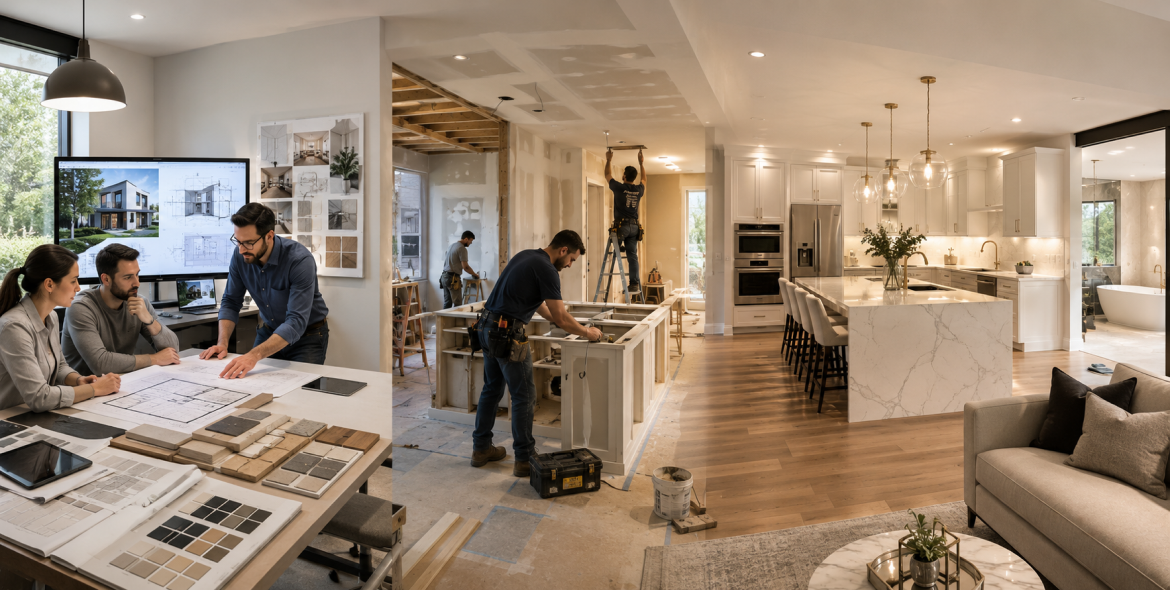
Homeowners in 2026 now use smart home remodeling solutions as their main method to improve their living spaces. Homeowners choose home renovations over new property purchases because rising property prices and increasing demand for custom home designs create better value through home renovations. The global home remodeling market shows steady growth through 4% to 6% annual increases while more than 60% of homeowners choose to renovate their current residences.
Successful execution of a renovation project requires more than design elements because it needs a well-structured home remodeling process. The project requires planning and budgeting to begin which should lead to the completion of all subsequent tasks. The guide will show you how to complete each step of your home renovation project through easy-to-understand practical methods.
Step 1: Define Your Remodeling Goals
The absence of established project goals prevents you from beginning your home renovation work. The absence of a definite project vision causes execution problems which result in project delays and extra costs.
Your assessment needs to start with an evaluation of kitchen facilities, bathroom spaces, and bedroom areas to identify which areas need improvements. Your assessment needs to determine which of the three objectives you will pursue between better functionality, improved visual appearance, or higher property value. The kitchen remodeling project will focus on three primary elements which include storage capacity and layout design and modern kitchen equipment.
When people get deceived through both spoken language and factual evidence, they develop into global citizens, who work toward goals that affect multiple future generations.
Step 2: Set a Realistic Budget
Home remodeling requires budget planning because it stands as its most essential requirement. The absence of a suitable budget leads to uncontrolled spending which results in financial overruns.
Renovation expenses fall under five categories:
- Materials is 40%–45%
- Labor is 35%–40%
- Design and permits is 10%–15%
It is also essential to also maintain a contingency fund for unforeseen costs, say 10% to 20%.
Average renovation costs
- Small renovation costs range from $10,000 to $30,000.
- Mid-range renovation costs begin at $30,000 and end at $100,000.
- Luxury remodeling projects start at $100,000 and exceed $250,000.
When you plan beforehand, you can smoothly push stress away from your life as the home renovation cost only increases more.
Step 3: Plan Your Design and Layout
After you establish your budget, space design becomes the next task. The process involves planning the layout and selecting materials while choosing color schemes and deciding on overall aesthetic design.
Modern home renovation concepts 2026 include:
- Smart home with smart features
- Appliances that consume energy efficiently
- Open and multifunctional designs
- Natural materials and warm colors
Good design planning will ensure that your renovation is both functional and aesthetically pleasing.
Step 4: Hire Professional Contractors
Selecting the right set of professionals is essential for high-quality results. Experienced contractors bring technical expertise while they execute your ideas according to your requirements. The review process needs to include past work assessment and reference checking together with multiple option comparisons before hiring.
The home remodeling project will proceed without interruptions while meeting its scheduled deadlines and maintaining required quality standards through the work of a dependable contractor. Your contractor will develop better understanding of your needs through effective communication which also helps prevent any potential misunderstandings.
Step 5: Get Permits and Approvals
Many renovations imply legal approval, especially if they entail the making of significant structural adjustments, installing electrical fittings, pipe systems, or if the scale of the project, setting the space in a leading new direction.
The required permits must be obtained because they provide proof that your renovation work follows local building laws and safety requirements. The project will experience legal problems and financial costs when this particular stage of work remains uncompleted. Your project gains protection through proper documentation which also facilitates upcoming property transactions. The home remodeling process requires this particular step to proceed because it helps to prevent both risk and delay.
Step 6: Demolition and Preparation
The demolition work starts after the planning process receives approval. The process requires demolition of existing materials and equipment and building elements to create an empty space for upcoming construction work. The process requires demolition of walls, removal of flooring materials, and extraction of obsolete systems.
The process requires this step because it produces complete disorder which leads to excessive noise. The next phase of your home renovation project will run smoothly because proper preparation has been completed.
Step 7: Construction and Installation
The home remodeling process reaches its most critical point during this phase which transforms your design specifications into actual construction work. The project requires all essential construction activities to be executed with precise oversight and organized management because of its vital importance for maintaining project quality and construction accuracy.
Key activities include:
- Installing flooring, cabinets, and fixtures
- Electrical and plumbing work
- Painting and finishing
In 2026, many homeowners are opting for.
- Smart lighting systems
- Energy-efficient appliances
- Modern kitchen and bathroom designs
The current phase needs constant observation because it needs to achieve all its objectives. The correct implementation of this work directly influences both your remodeling project’s final results and its future performance.
Step 8: Final Inspection and Quality Check
Every project requirement needs complete inspection before its final execution. The final check verifies the correct operation of all installations while confirming their compliance with established quality standards.
Check for:
- Plumbing leaks or electrical issues
- Proper installation of fixtures
- Finishing quality
A good inspection stops future problems by ensuring long term peace of mind.
Step 9: Interior Styling and Finishing Touches
The final step of home decoration begins after all construction work has been completed. The design phase of this project aims to improve three aspects of your home interior design: comfort, aesthetics, and personal style.
The primary consideration of modern home interior design:
- Minimalist layouts
- Warm color palettes
- Functional décor
The preferential final glance will lend the finishing touches lending appeal and invitingness of the adjoining space. A home that displays proper styling not only achieves visual appeal but also enhances daily comfort and functional use.
Step 10: Maintenance After Remodeling
The maintenance of your space becomes equally important to the renovation work after you complete the remodeling. Your home remodeling project will maintain its value through regular maintenance which protects the upgrades that you made and their operational efficiency and visual appeal.
Simple maintenance tips
- Clean and maintain surfaces regularly
- Check plumbing and electrical systems
- Service appliances periodically
Regular maintenance of your home establishes a constant state of freshness while it protects against expensive repairs, and it provides enduring comfort and operational efficiency.
Key Tips for a Smooth Home Remodeling Process
The successful completion of a renovation project requires effective planning together with intelligent decision-making and unbroken project communication. The application of essential strategies will help you prevent typical errors which will lead to a successful home remodeling project that begins and ends without problems.
Important tips to follow
- Always plan ahead before starting
- Stick to your budget and avoid unnecessary changes
- Communicate clearly with your contractor
- Choose durable materials for long-term benefits
- Focus on functionality along with design
Cost savings, streamlining of process, stress reduction, and a better product are some of the outcomes with the application of the best strategies.
Conclusion
The step-by-step home remodeling process in 2026 requires effective planning together with intelligent financial management and successful project implementation. The process starts with goal establishment and ends with final detail completion because every phase of work is essential for reaching the intended outcomes.
The current demand for contemporary spaces which serve practical purposes and reflect individual tastes has created a growing need for home renovation projects. The structured approach combined with trend and cost knowledge enables you to create a cozy stylish home from your existing space.
For more advice, renovation ideas, and professional help, visit: https://remodelingessential.com/
