
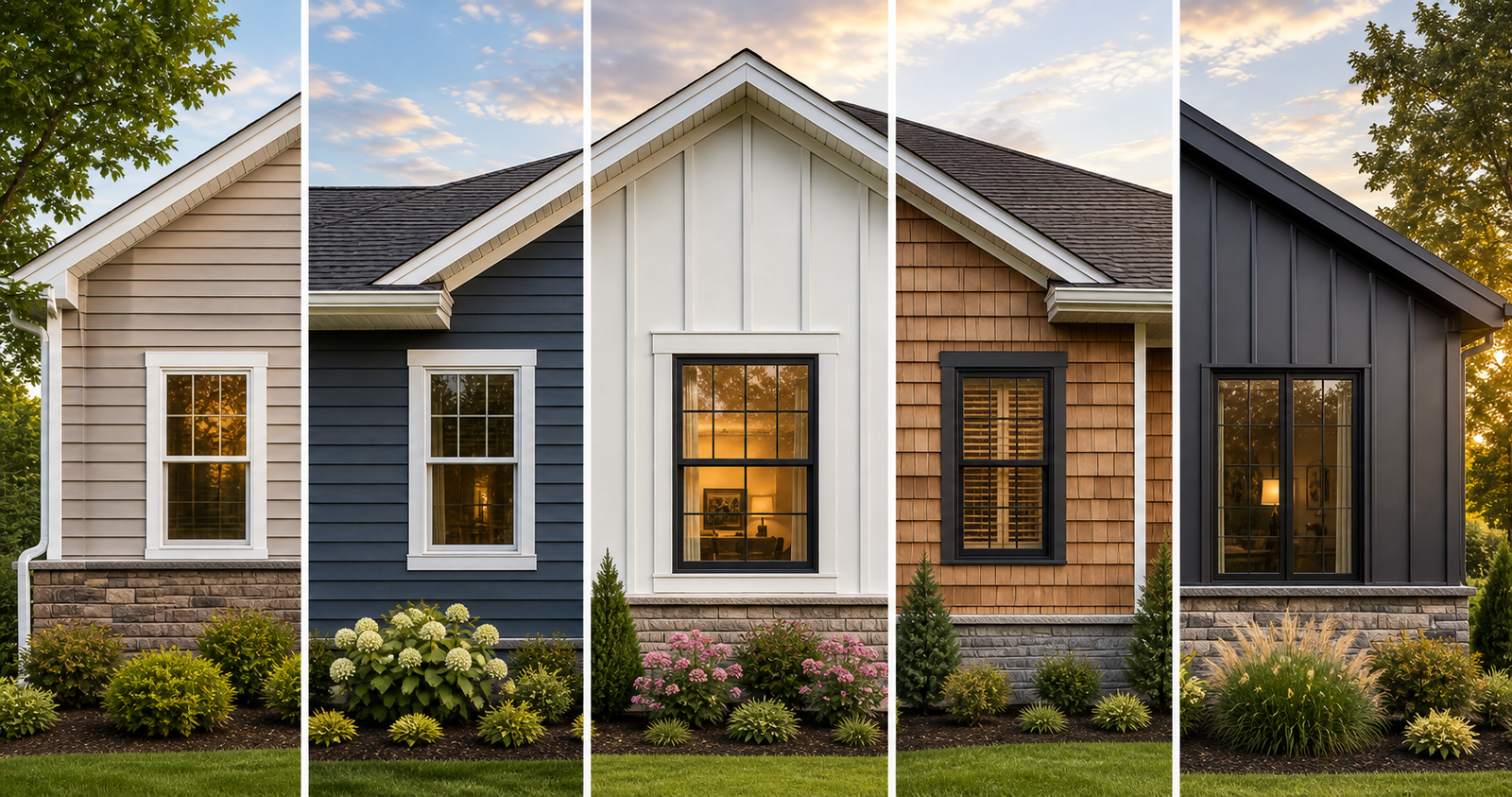
Choosing between fibre cement, vinyl, and engineered wood is one of the biggest decisions in any exterior renovation. This House Siding Comparison breaks down cost, durability, and installation so you can pick the right material with confidence.
Whether you’re a homeowner planning a full re-side, a DIY renovator, or a contractor advising clients, the right choice affects your budget, your home’s curb appeal, and how much upkeep you’ll deal with for the next 20–30 years. This guide also walks through attaching fiber cement siding correctly, since installation quality matters as much as the material itself.
Key Takeaways
- Fibre cement offers the best balance of durability, fire resistance, and design flexibility, but it’s heavier and requires precise installation.
- Vinyl remains the most budget-friendly and low maintenance siding option, though it performs less well in extreme heat or impact-prone areas.
- Engineered Wood Siding gives a natural wood look with better moisture resistance than solid wood, at a mid-range price point.
- A proper siding cost comparison should include material, labour, lifespan, and long-term maintenance, not just the upfront price.
- Correct fastening and flashing are the most common failure points across all house siding options.
Understanding Your Exterior Siding Materials
Exterior siding materials protect your home’s structure from moisture, wind, and temperature swings while defining its overall look. The three most common modern options are fibre cement, vinyl, and engineered wood.
Each material differs in composition, weight, installation method, and lifespan. Understanding these differences upfront prevents costly mistakes later, especially when you’re comparing quotes from different contractors.
What Makes a Siding Material Good for Your Home?
A good siding material balances four factors: durability, maintenance needs, climate suitability, and cost. No single option wins on all four, which is why this comparison matters before you commit.
- Climate exposure (humidity, hail, freeze-thaw cycles)
- Local building codes and fire ratings
- Long-term maintenance budget
- Aesthetic goals (paintable, textured, colour-locked)
Fiber Cement Siding: Durability Meets Design
Fiber cement is a composite of cement, sand, and cellulose fibers, engineered to resist fire, rot, pests, and impact while mimicking wood grain or stucco textures.
It’s heavier than vinyl and engineered wood, which means installation requires more planning, proper fastening, and two installers in most cases.
How to Begin Attaching Fiber Cement Siding the Right Way
Properly attaching fiber cement siding starts with a moisture barrier, correct fastener placement, and manufacturer-specified nail spacing; skipping any of these steps is the leading cause of premature failure.
Step-by-step installation basics:
- Install a weather-resistant barrier (WRB) over sheathing.
- Mark stud locations for accurate fastening.
- Start with a starter strip at the base for level alignment.
- Use corrosion-resistant nails or screws, driven flush (not overdriven).
- Maintain a 1/8-inch gap between panels for expansion.
- Caulk seams and joints with a paintable exterior sealant.
- Prime and paint field-cut edges before installation.
Tools typically needed: circular saw with a fiber-cement blade (or shears), pneumatic siding nailer, chalk line, level, and standard safety gear including a dust mask, since cutting fiber cement produces silica dust.
Vinyl Siding: Affordable and Low Maintenance
Vinyl siding is made from PVC and is the most widely installed siding material in North America, largely due to its low cost and simple installation.
It’s a strong, low-maintenance siding choice: no painting, no sealing, and only occasional washing with a garden hose.
Advantages:
- Lowest upfront cost among the three
- Wide color and style range
- Never needs painting
- Lightweight and faster to install
Drawbacks:
- Can crack in extreme cold or warp in intense heat
- Less impact-resistant than fiber cement
- Shorter average lifespan (20–40 years vs. 30–50+ for fiber cement)
Engineered Wood Siding: A Natural Alternative
Engineered Wood Siding is made from wood strands or fibers bonded with resins, then treated with a protective coating to resist moisture and insects better than solid wood.
It gives homeowners the warmth of real wood grain without the same vulnerability to rot that plagues traditional wood siding.
Where Engineered Wood Siding Fits Best
Engineered wood works well for homeowners who want a natural aesthetic and are willing to maintain protective coatings every 5–8 years. It’s a middle-ground choice between vinyl’s low upkeep and fiber cement’s higher durability.
House Siding Comparison: Side-by-Side Table
| Feature | Fiber Cement | Vinyl | Engineered Wood |
| Average Lifespan | 30–50+ years | 20–40 years | 20–30 years |
| Maintenance | Repaint every 10–15 yrs | Occasional wash | Reseal every 5–8 yrs |
| Fire Resistance | High | Low | Moderate |
| Impact Resistance | High | Moderate | Moderate |
| Weight | Heavy | Light | Moderate |
| DIY Friendliness | Moderate | High | Moderate |
| Typical Cost per Sq Ft (installed) | $6–$13 | $3–$8 | $5–$10 |
Siding Cost Comparison
A full siding cost comparison should account for material price, labor complexity, and expected maintenance spend over 20 years, not just the sticker price per square foot.
- Vinyl wins on upfront cost and labor speed.
- Fiber cement costs more initially but often costs less over a 30-year horizon due to fewer replacements.
- Engineered wood sits in between, with periodic resealing adding to lifetime cost.
According to industry pricing data from HubSpot’s home services research, material choice and regional labor rates are the two biggest cost variables homeowners underestimate.
Weather Resistant Siding: Performance Breakdown
Choosing weather resistant siding depends heavily on your climate zone.
- Coastal/humid areas: Fiber cement resists moisture and salt air best.
- Cold climates: Vinyl can become brittle; fiber cement and engineered wood hold up better in freeze-thaw cycles.
- Hot, dry climates: Vinyl may warp near south-facing walls; fiber cement stays stable.
- Storm-prone regions: Fiber cement’s impact resistance reduces hail and debris damage.
For localized weather severity data, NOAA and regional climate resources can help homeowners assess risk before choosing a material. Google Search Central also indexes many local building authority guidelines worth checking.
Common Mistakes to Avoid
- Overdriving nails, which restricts natural panel movement and causes buckling.
- Skipping the moisture barrier to save time or budget.
- Ignoring local fire codes that may require or restrict certain durable siding materials.
- Ordering insufficient starter strips or trim, causing gaps at corners.
- Painting fiber cement before the recommended cure time.
Practical Examples
A homeowner in a coastal humid region replacing 40-year-old wood siding often chooses fiber cement for its moisture and salt resistance, accepting the higher upfront cost for a 30+ year lifespan.
A homeowner on a tighter renovation budget in a moderate climate frequently chooses vinyl, prioritizing quick installation and zero repainting over maximum durability.
A renovator aiming for a modern-farmhouse look with natural wood grain, but wanting better moisture performance than solid wood, typically lands on engineered wood as the practical middle ground.
FAQs
1. Which siding material lasts the longest?
Fiber cement typically lasts the longest, often 30–50+ years with proper maintenance, outperforming both vinyl and engineered wood in this house siding comparison.
2. Is vinyl siding cheaper than fiber cement?
Yes, vinyl generally costs less upfront and is faster to install, though fiber cement can be more cost-effective over a 20–30 year period due to fewer replacements.
3. Can I install fiber cement siding myself?
DIY installation is possible but challenging due to the material’s weight and the precision needed for attaching fiber cement siding correctly; many homeowners hire a contractor for this step.
4. Does engineered wood siding require more maintenance than vinyl?
Yes, engineered wood needs periodic resealing or repainting every 5–8 years, while vinyl needs little more than occasional cleaning.
5. What’s the most weather resistant siding option?
Fiber cement generally performs best across extreme heat, cold, humidity, and storm-prone conditions, making it a strong weather-resistant siding choice for harsh climates.
Conclusion
This House Siding Comparison shows that there is no universal best material, only the right fit for your climate, budget, and maintenance needs. Fiber cement offers durability and fire resistance, vinyl provides affordability and easy upkeep, while Engineered Wood Siding adds a natural appearance with moderate maintenance.
Among these house siding options, proper installation is essential for long-term performance. Remodeling Essential helps homeowners make informed decisions with practical remodeling guidance and material insights.
