
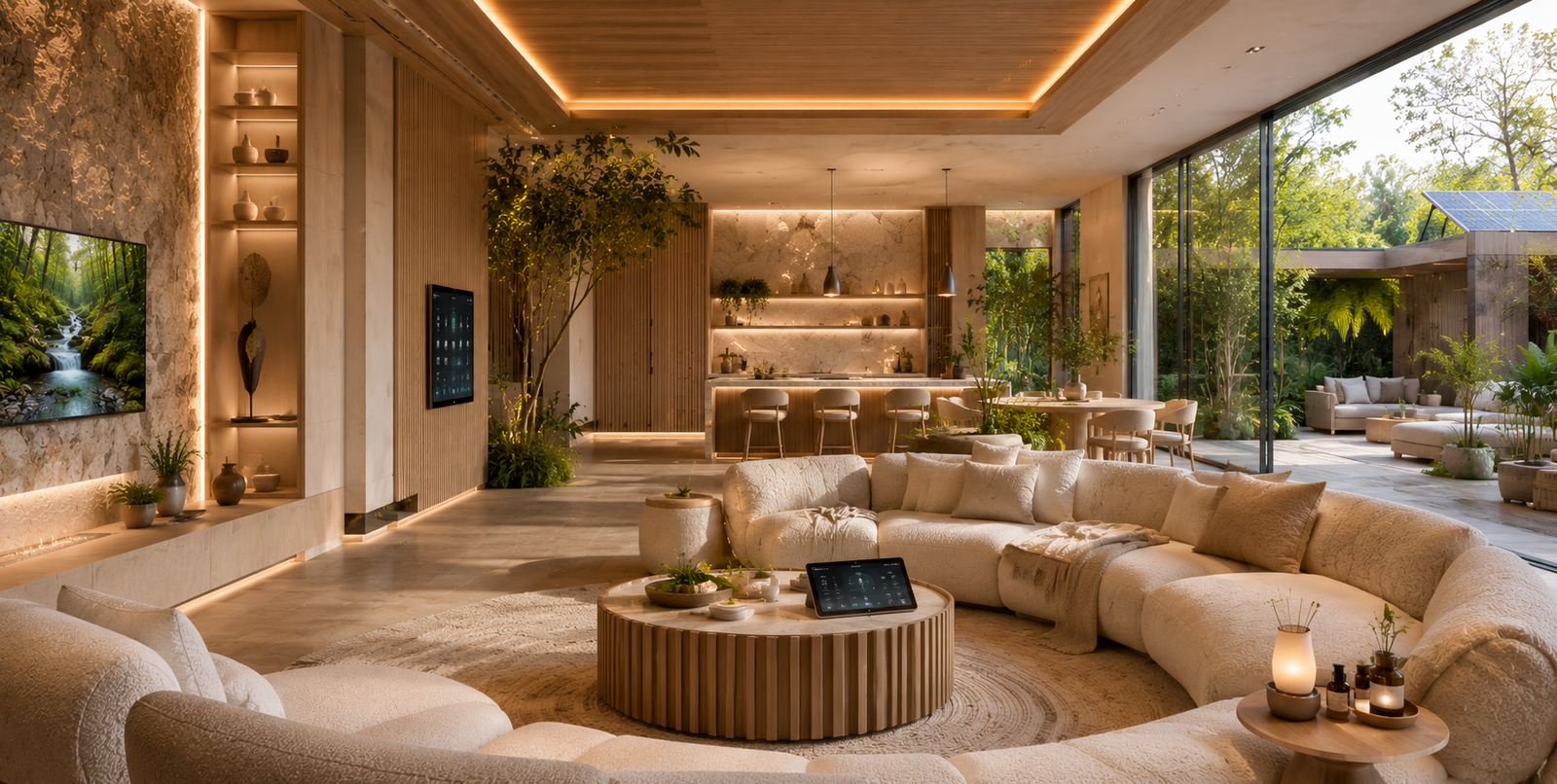
The trend of house renovation in the year 2026 goes beyond mere appearances and utility since homeowners are paying attention to aspects that contribute to their emotional wellness and relaxation. Immersive houses that help in decreasing stress levels, improving focus, and making life healthier and more comfortable are becoming a reality in modern home renovations.
The new emerging trend has contributed to the increased demand for wellness houses, which use various aspects such as lighting, acoustics, texture, smell, and spatial arrangements to create an environment conducive to emotional wellness. In addition to this, wellness room designs, calming atmospheres, and sophisticated lighting for creating soothing atmospheres have been adopted.
According to the Global Wellness Institute, the sensory spaces home trend in wellness-focused home design has continued to grow rapidly.
Source: Global Wellness Institute Wellness Real Estate Report
Homes Are Becoming Emotional Retreats
The current generation of homeowners desires to be emotionally comfortable and mentally at peace, rather than aesthetically attractive homes. The well-being home design is currently emphasizing softer lighting, textured materials, noise dampening, calming places, and flexibility to make these places quieter and emotionally supportive. Designers claim that a calmer interior will enhance comfort for homeowners by making them more balanced and relaxed.
Immersive Homes Are Redefining Modern Living
With the advent of immersive homes, there have been changes to how remodels are approached. Rather than concentrating solely on aesthetic appeal, the current trend is for designers to consider several senses in one environment. An immersive environment is known to include such components as:
- Lighting design
- Controlled acoustics
- Aromatherapy
- Use of natural materials
- Adaptive rooms
In other words, immersion helps create an atmosphere where people can relax and connect with their surroundings on an emotional level.
Wellness Home Design Is Becoming Mainstream
A wellness home of today cannot be regarded as an indulgence restricted to expensive homes anymore. A growing trend among homeowners is making wellness at the heart of renovations.
Common wellness-related improvements nowadays include:
- Air purification systems
- Circadian lighting
- Natural ventilation
- Toxin-free materials
- Quiet retreats
Such improvements contribute to better physical and mental health along with enhanced home comfort. According to experts, wellness remodeling is likely to become even more popular in the future as homeowners pay greater attention to de-stressing and staying healthy indoors.
Sensory Lighting Is Transforming Interiors
Today, lighting is becoming more important for psychological well-being and sensory lighting. Today’s homeowners want their lighting designs to be customizable depending on the mood, task, and time of day.
Examples of popular sensory light upgrades today are:
- Adjustable color lighting
- Warm dimmable LED lights
- Motion-sensing lights
- Circadian lighting
- Layered lighting for ambiance
Such systems help to create calming spaces where people can feel better emotionally and have better rest at night, as well as less strain on the eyes. Professionals also believe that layered lighting makes the interior look better balanced visually.
As Architectural Digest reports, the trend towards soft layered lighting is becoming increasingly popular among homeowners who want more comfortable spaces.
Source: Architectural Digest Interior Lighting Trends
Sensory Spaces Home for Calming Interiors
The modern homeowner now demands that there be a specific part of the house created for the purposes of relaxing and emotional recuperation. The more stressed people become, the more rapidly sensory calming zones become an essential part of renovations.
Popular calming sensory room ideas now include:
- Meditation nooks
- Reading retreats
- Texture rooms
- Sound rooms
- Dimly lit relaxation zones
By including such sensory rooms in the home, homeowners can escape digital distraction while achieving better emotional stability.
According to designers, sensory spaces are particularly useful in achieving a state of relaxation and mental wellness.
Natural Materials Support Emotional Comfort
Sensory-based interiors today depend on natural materials in that they contribute to the development of a more warm and psychologically soothing environment.
Current wellness materials include:
- Oak wood
- Linen fabrics
- Stone-like surfaces
- Clay coatings
- Soft organic textiles
Such materials contribute to creating a more natural connection and soften the interior at the same time. Many designers argue that natural textures tend to make old minimalist interiors less harsh and artificial.
Another important tendency is a preference for warm organic coatings due to the fact that they become even more beautiful with time rather than getting old-fashioned.
Sound Control Is Becoming More Important
Sound insulation is rapidly turning into an important aspect of remodeling today, as homeowners wish to live in quiet spaces. Among those commonly preferred sound-proofing solutions nowadays are acoustic wall paneling, soft floors, insulated partitions, soundproofing curtains, and an integrated audio system. They all contribute to a distraction-free atmosphere in the house and enhance its level of comfort. As designers state, silent interiors give off the feeling of calmness and luxury.
Wellness Room Design Is Expanding Beyond Bathrooms
Wellness room designs have expanded from their application in spa bathroom or meditation rooms. Homeowners now seek to have several designated wellness zones throughout their houses where one can feel relaxed.
Such wellness-oriented areas include:
- Yoga room
- A quiet office at home
- Relaxation area
- Rest bedroom
- An indoor garden
This shows the rising need for houses that promote healthy living habits rather than just being able to accommodate a homeowner’s needs.
Technology Is Supporting Sensory Remodeling
Modern technology has also become increasingly common in creating interior spaces geared towards enhancing the wellness experience at home. Some popular upgrades through technology in creating such interiors currently include aroma diffusers, voice-controlled lighting, climate management technology, air quality control, and sound therapy.
The use of technology in creating home interiors allows individuals to tailor their home settings according to their moods and well-being needs. Experts believe that the most effective technology use in interior remodeling is where technology blends seamlessly and naturally with interior settings.
Flexible Spaces Are Replacing Rigid Room Layouts
Remodeling in the contemporary world is moving away from the concept of dedicated single-function rooms into adaptable sensory spaces. Homeowners now look for spaces that will adapt to their changing emotions as the day goes by. The new adaptable spaces are able to provide for relaxation, entertainment, working, meditative exercises, and even family gatherings.
In this regard, it is possible for homeowners to develop personalized and emotion-driven spaces without necessarily having a bigger house.
Color Psychology Is Influencing Remodeling Trends
The choice of colors has become an important factor in remodeling homes with regard to the senses, since various colors have an impact on emotions. Some of the colors used for wellness interior design include soft beige, sage green, warm white, dusty blue, and clay-like colors. Such neutral colors enable the creation of relaxed interiors, as opposed to overly vibrant colors.
Interior designers say earthy colors are able to provide emotionally balanced environments, as well as timeless and calming settings.
Outdoor Connections Improve Wellness Design
Current sensory remodeling is also largely concerned with reinforcing the links between indoor and outdoor living spaces. Current trends in enhancing well-being include large sliding doors, gardens inside the house, maximizing natural daylighting, outdoor meditation zones, and landscapes that connect residents with nature.
Such design elements are known to promote greater exposure to natural light as well as create stronger visual links to nature. According to designers, nature-themed spaces enhance emotional comfort and relaxation as organic settings help in minimizing stress, improving mental well-being, and promoting more relaxed living conditions.
Final Thoughts
Remodeling is gradually shifting its focus towards creating a conducive atmosphere that promotes good mental state and physical well-being. The trend in remodeling will not only be about aesthetics but about creating designs that enhance the emotional state of users by improving their psychological well-being.
With innovative sensory lights, wellness zones and immersive interior designs, remodeling has taken new dimensions in recent times, aiming at promoting well-being and health by ensuring user convenience and comfort.
Sensory design is one of the emerging trends that will define future remodeling projects.
Visit Us:- https://remodelingessential.com/
